

The Beale Trumpet
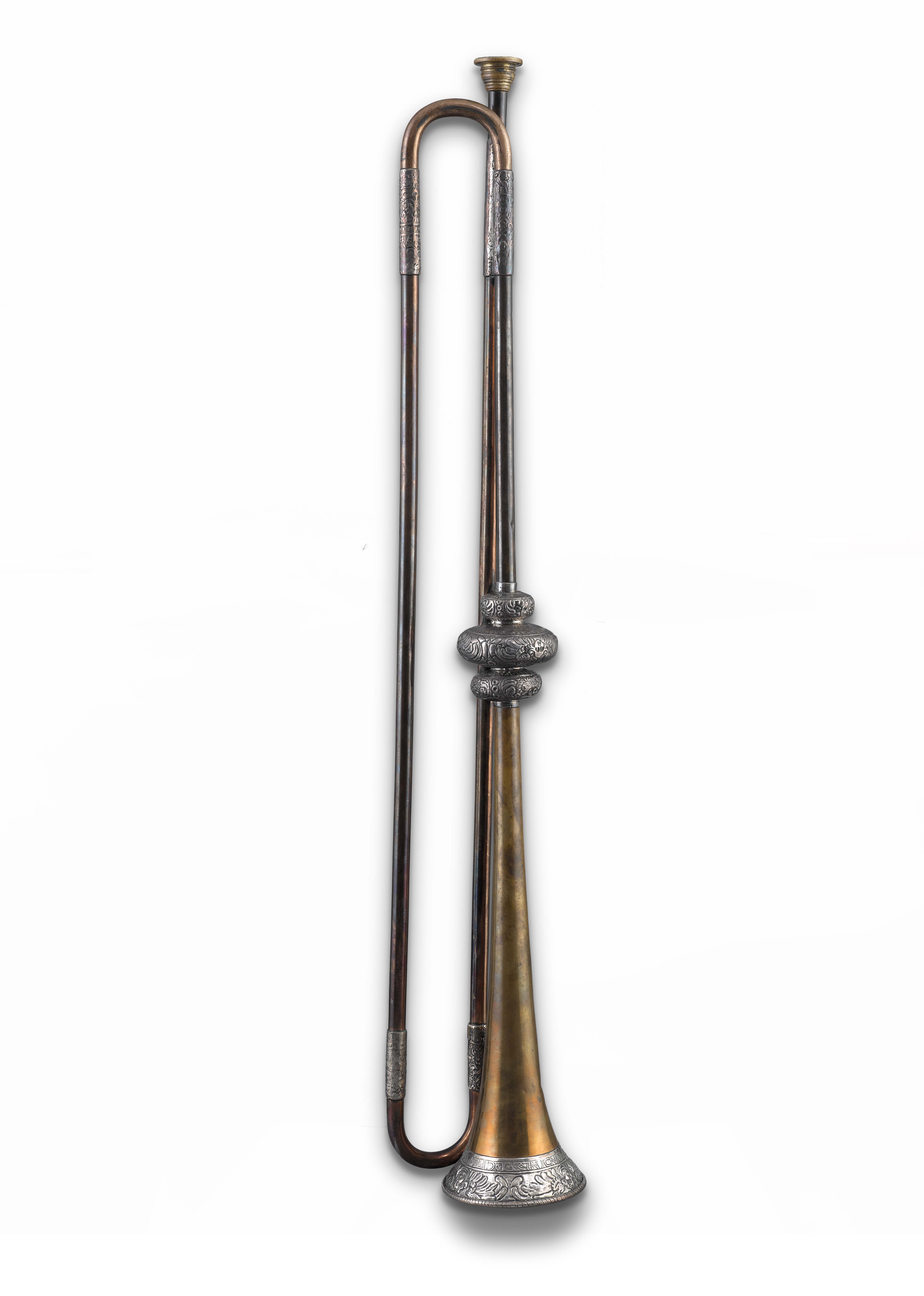
The Beale Trumpet was made in 1667 by the distinguished English trumpeter Simon Beale. During the English Civil War and the Protectorate, Beale served as State Trumpeter to Oliver Cromwell. Following the Restoration of the monarchy, he was appointed State Trumpeter to Charles II.
The instrument’s design reveals intriguing influences. Certain features suggest that Beale may have collaborated with the king’s other principal trumpeter, John Bull, who had accompanied Charles II during his exile in Europe and absorbed contemporary continental styles. These European fashions appear to have informed aspects of the trumpet’s construction and decorative profile.
Later History
In later life, the Beale Trumpet became known as the “luck” of Woodsome Hall. During the late 19th and early 20th centuries, it took on a more domestic role: the butler used it to summon household members and guests to dinner!
Construction and Condition
In its present state, the Beale Trumpet has been soldered together, making the joints non-removable. Metallurgical analysis indicates that the bell is probably not original. However, modern copies based on its profile have demonstrated that the design functions exceptionally well.
The mouthpiece is notably large, almost comparable in size to a trombone mouthpiece, and is soldered directly to the mouthpipe. X-ray examination has revealed that it lacks a back-bore, a feature that presents significant intonation challenges for modern players.
Modern Use
Despite these technical challenges, the Beale Trumpet has been played in recent years. It notably formed part of a fanfare march for the Dean and Chapter of Canterbury Cathedral during the celebratory service marking the centenary of the Art Fund.
Listen to the Beale Trumpet
https://w.soundcloud.com/player/?url=https%3A//api.soundcloud.com/tracks/1208391082&color=%23ff5500&auto_play=false&hide_related=false&show_comments=true&show_user=true&show_reposts=false&show_teaser=true&visual=true

